
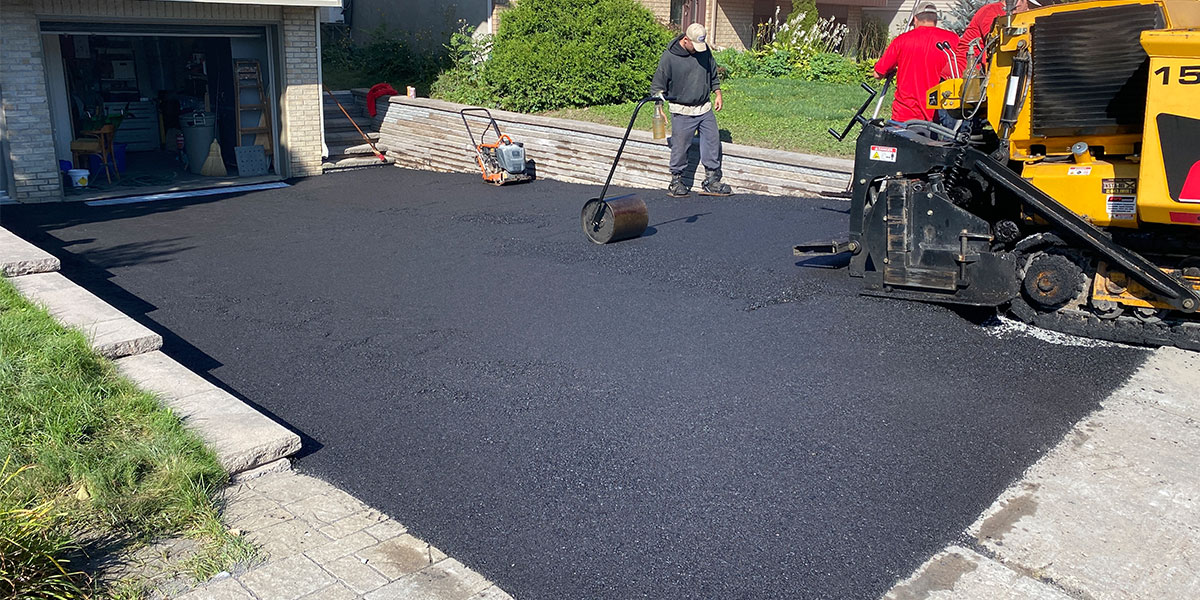
Asphalt is widely used for driveways and parking lots. At Paysagement Expert, we carry out asphalt projects suited to each type of site and use. There are several types of asphalt, each playing a specific role in pavement durability.
Choosing the right mix, along with a good base and proper installation, is essential for lasting pavement.
Asphalt is a mixture of aggregates (stone and sand) and bitumen. The bitumen acts as a binder to hold the materials together.
The mix composition directly affects:
In Québec, the most commonly used types are bituminous mixes (EB). The number that follows (EB10, EB14, EB20) indicates the maximum aggregate size.
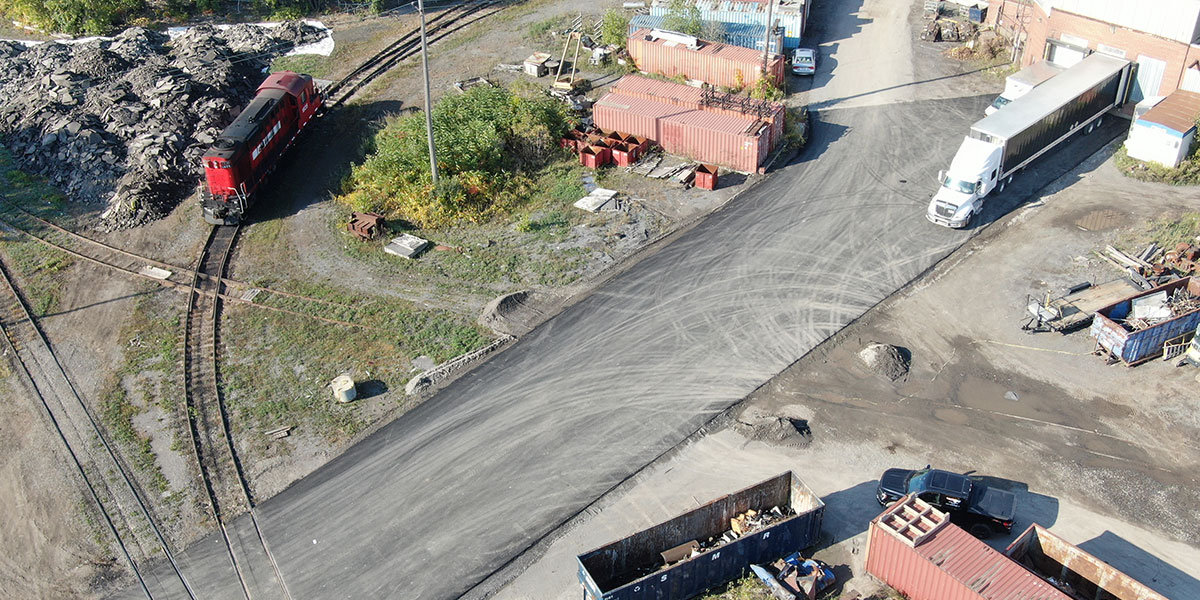
EB5 is made with very fine aggregates. It provides a very smooth finish and is mainly used for repairs or specific applications where appearance is a priority.
EB10 is the most common mix for residential applications. It provides a relatively smooth surface and good durability.
EB10C is used as a surface course. It provides a more uniform and attractive finish.
Typical uses:
EB14 contains larger aggregates, making it more robust. It is often used as a base course or in areas subject to heavier use.
Uses:
EB20 is mainly used for the pavement structure. It contains coarser aggregates and offers high strength.
Uses:
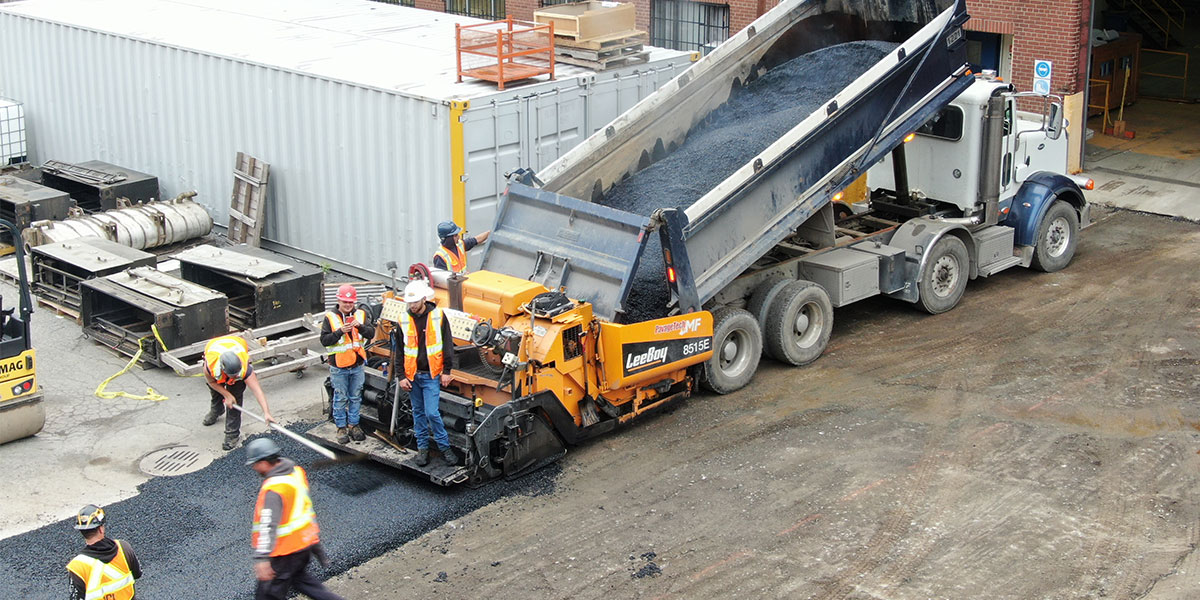
In addition to bituminous mixes (EB), there are more structural mixes known as EGS.
These mixes are designed to provide greater load-bearing capacity and are mainly used in base courses.
They contain coarser aggregates and are suited to heavy-load areas such as roads, commercial parking lots and industrial surfaces.
For residential projects, they are generally used as a base beneath the visible layers.
Typically used:
The goal is to achieve a good balance between appearance and durability.
Preferred choices:
This helps support heavier loads and extend the life of the pavement.
Some mixes are used for repairs:
They are convenient for quick repairs but offer more limited durability.
More economical, but generally less durable. Used for secondary applications.
Allows water to infiltrate through the surface. Used in specific situations.
Contains additives that improve flexibility and strength, particularly under changing temperatures.
For residential use, asphalt is generally between 2 and 3 inches thick after compaction.
In practice, it is common to install:
Compaction reduces the thickness, which is normal.
For most residential projects, one properly installed layer is sufficient, provided that:
Two-layer installation is less common in residential projects and is generally used for:
These installations include:
As with concrete, it all starts below the surface.
A good base includes:
A poor base leads to:
Over time, asphalt can crack or wear down.
Proper maintenance includes:
This helps extend the life of the pavement.
There are several types of asphalt, each suited to a specific use.
The right mix, a solid base and proper installation make the difference between lasting pavement and repairs in the near future.
An on-site assessment helps determine the right mix for your property, intended use and budget.


I am a contractor, consultant and digital strategist.
Since 2009, I have been developing my own web platforms in the construction industry. These strategies have generated over $700,000 in actual revenue.
I founded Paysagement Expert in 2015, followed by Travaux Experts as a general contractor. I learned to build on job sites before building in the digital world.
Today, through LeProduweb, I help small and medium-sized businesses integrate artificial intelligence to modernize their marketing, organize their operations and accelerate their growth.
AI that works for entrepreneurs. Not the other way around.

Paysagement Expert provides professional landscaping, outdoor maintenance and property enhancement services for residential and commercial clients. The company focuses on quality, durability and personalized service tailored to each client’s needs.

Travaux Experts offers specialized renovation, maintenance and general contracting services. With extensive on-site experience, the company provides reliable, effective solutions tailored to the requirements of residential and commercial projects.
Asphalte Expert specializes in asphalt paving and maintenance for residential and commercial properties. The company offers durable, professional solutions suited to our local climate.
Réparation Acrylique specializes in repairing and protecting exterior surfaces such as balconies, foundations, concrete structures and walls. The company provides durable solutions to improve the waterproofing, strength and longevity of residential and commercial structures.
5809-7098-01